
Stop me if you’ve heard this one before.
The man fires a rifle for many years, and he goes to war, and afterward he turns the rifle in at the armory and he believes he’s finished with the rifle. But no matter what else he might do with his hands— love a woman, build a house, change his son’s diaper—his hands remember the rifle and the power the rifle proffered. The cold weight, the buttstock in the shoulder, the sexy slope and fall of the trigger guard.
Many of you are probably ready to tear into me, about how I stole that from the opening monologue of Jarhead. Some fewer of you may recognize it as a direct quote from the book itself instead of the shortened version produced for said monologue with just the punchiest parts left intact. Regardless, my little homage to Anthony Swofford there serves a point, but it’s one that we’ll get to later.
For as far back as the first vaguely human predecessor ape slapped another ape before running behind its parent who runs the place to avoid the consequences, there have been three constants to the human experience. First, bad things happen to innocent people, and bad people are going to do bad things. Second, society does its best to deal with these issues, and finally third society often ends up either incapable or outright unwilling to ensure proper redress. It is due to these three constants of the human experience that we have the concept of the hero in the first place.
Across myth, legend, pulp, and modern cinema, one figure appears again and again, that of the lone operator. The competent outsider who acts not because he is authorized, but because no one else can or will.
It all begins with the mythic, the strongman such as Heracles or Samson. Born in a time before institutions, before society could do much more than cling to a patch of dirt and attempt to impose order upon it, they existed as a way to impose that order. Heracles did not attempt to debate the Lernaen Hydra or the Nemean Lion, and Samson did not negotiate with the Philistines. They killed them, and in doing so they brought peace for their people and justice for communities that had no other means of redress.
As society evolved, so too did the role of the hero. The legend of King Arthur centers on the restoration of legitimacy. His appearance signals the return of the rightful institution through which order can once again be administered with wisdom and restraint. Meanwhile, Robin Hood provides us with the first glimpse of the vigilante hero. His legend is more than the oft-repeated refrain of “robbing the rich to give to the poor.” It is a story about a man forced into a position of rebellion against an illegitimate, cruel, and maladaptive authority. He provides the people with a release valve, a way to redress the wrongs perpetrated by King John and the Sheriff of Nottingham’s regime and receive justice.
As the world grew larger, denser, and more impersonal, the hero was forced to change once again. It was no longer enough to offer redress after the fact. There were too many victims, too many crimes, and too little certainty that justice would ever arrive in time. In the modern city, suffering could vanish beneath the noise of millions.
The hero therefore became proactive. No longer merely a solver of wrongs, he became a warning. The modern hero exists not only to punish evil, but to deter it. He stands forth to draw a clear line and declare, through action rather than decree, these acts will not be tolerated.
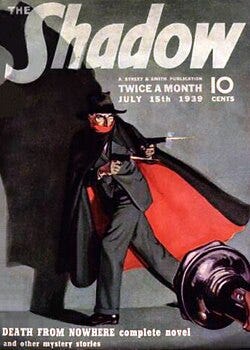
Walter B. Gibson’s The Shadow provides the first true template for this figure. Seen, heard, and felt only when he chooses, The Shadow becomes a presence rather than a man. He exists as an omnipresent fear haunting the criminal underworld of 1930s New York. He does not merely dispense retributive justice; he offers certainty. Crime will be answered, and it will be answered decisively.
This mantle would later pass to The Shadow’s most famous successor: Bruce Wayne, the Batman. Here the archetype solidifies. The lone operator now exists in a world where the police cannot act quickly enough and the courts cannot or will not act decisively. When institutions stall, he moves. When systems fail to act, he intervenes, operating in the narrow and dangerous space between what the law permits and what morality demands.
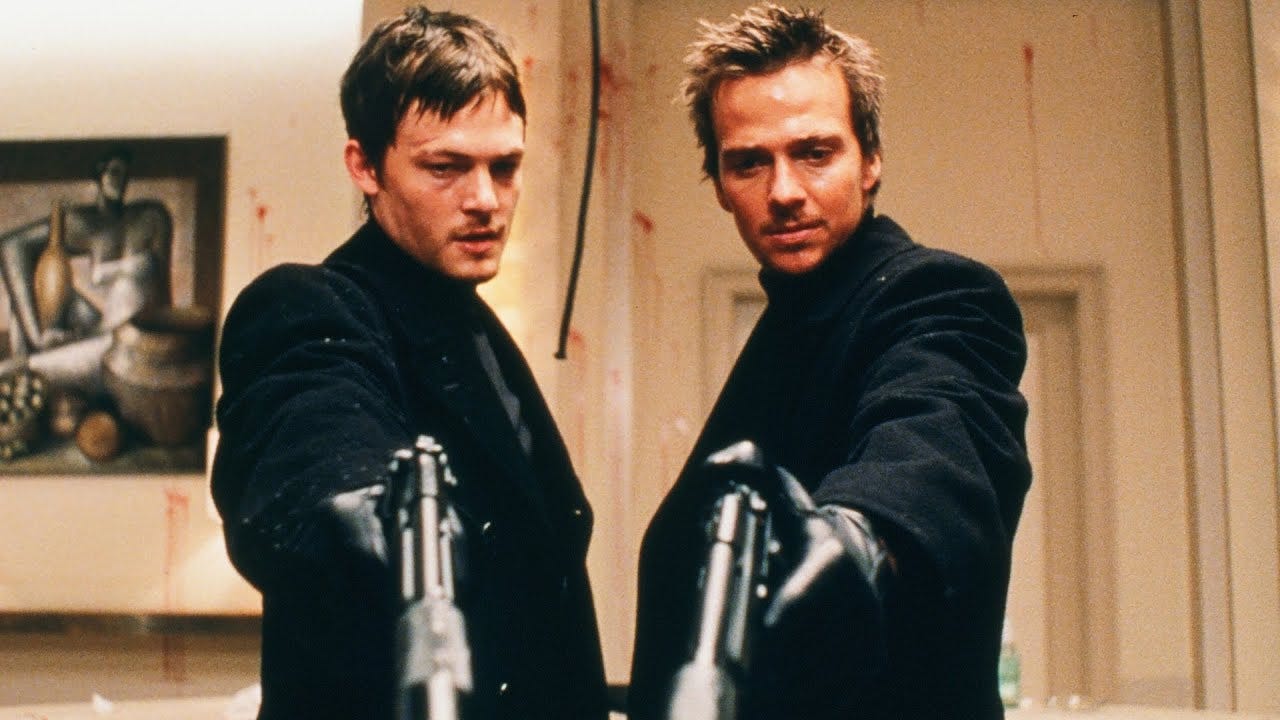
But when faith in institutions collapses entirely, the lone operator ceases to be symbolic and instead becomes personal. Following in the footsteps of figures like The Shadow and Batman are a host of modern characters who no longer act as ideals, but as reactions. The Punisher, Paul Kersey of Death Wish, and the McManus brothers of The Boondock Saints do not emerge from myth or destiny, but from grievance, loss, and moral exhaustion.
These are not heroes born to the role like the myths of old nor even people of preternatural capability like the heroes that provided their template. They are ordinary people who reach a breaking point—individuals who come to believe that the suffering around them has become too pervasive, too ignored, or too accepted to be left unanswered. In these stories, the lone operator is no longer a distant figure haunting the night, striving to right every wrong in the city. He is the neighbor. The veteran. The professional. The working man.
The fantasy shifts uncomfortably close, suggesting not that anyone should act this way, but that under sufficient pressure, anyone might. That upon confrontation with the true ugliness in this world that everyone possesses a point at which the need to do something—anything—to at least redress the wrongs committed upon them and theirs. The need overcomes everything else, every instinct to prioritize their own well-being and comfort, and so they set out on their crusade.
Which brings us, finally, to the present. Why does this archetype still resonate today, even in a world saturated with laws, agencies, oversight, and systems? A world carefully tuned to discourage individuals from standing apart, from drawing hard lines, from accepting personal responsibility beyond what procedure allows.
The answer is counterintuitive. People do not long for violence. Most would gladly choose the modern world—with all its rules, controls, and constraints—over any earlier era, if it meant a life free from hardship. What they long for instead is competent moral action. For a moment when action matters again. For the reassurance that, if pressed, they could be the one to stand when standing is required.
Even if this belief is illusory, the story of the lone operator endures because it offers comfort. It reminds us that we are more than interchangeable parts in an impersonal machine. That we possess agency. That there exists, somewhere within us, the capacity to refuse quiet submission when confronted with injustice. Not because we wish for chaos or bloodshed, but because we want to believe that responsibility, when it truly matters, can still be carried by a single individual who finally decides “enough is enough.”
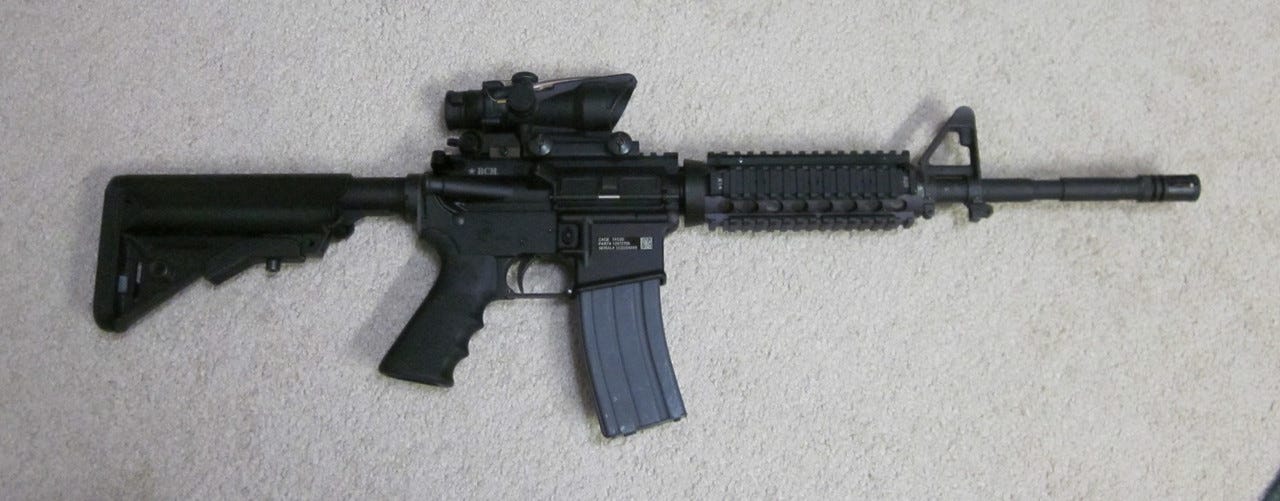
When Anthony Swofford wrote about the rifle, he was not writing about violence. That much is certain, even if you could get a dozen different answers from a dozen different people as to what he intended with that section. To me, he was writing about purpose. About a time in a person’s life when responsibility was unmistakable. When the enemy was known, the mission was clear, and action followed understanding. Long after the rifle is turned in, that sense of clarity and a longing for it remains. The hands remember the weapon itself, of course, but more they remember what it represented.
I have spent my entire adult life chasing that same purpose. Not in fiction, but in the margins of reality. I’ve tracked terrorists, insurgents, and transnational criminal organizations. I’ve spent years hunting those who preyed on others, identifying them, and placing them in the sights of systems designed to stop them. Even now, removed from those roles, I find myself drawn to the work in quieter ways, volunteering time and effort to help expose human traffickers and the like.
What lingers is not the work itself, but the moments when it ended without resolution. Times when the evidence was there, the truth was clear, and yet action never came. When the cost was deemed too high, the priority shifted elsewhere, or justice was deferred to a future that might never arrive. In those moments, evil was not defeated. Merely postponed.
It is in that space that the lone operator myth begins to whisper again. Not as a desire for violence, but as a longing for agency. For the idea that someone, somewhere, might be able to step forward when the system cannot. This is why the example of Senior Chief Shannon Kent resonated so deeply with me as I wrote Eastern Blood Price.
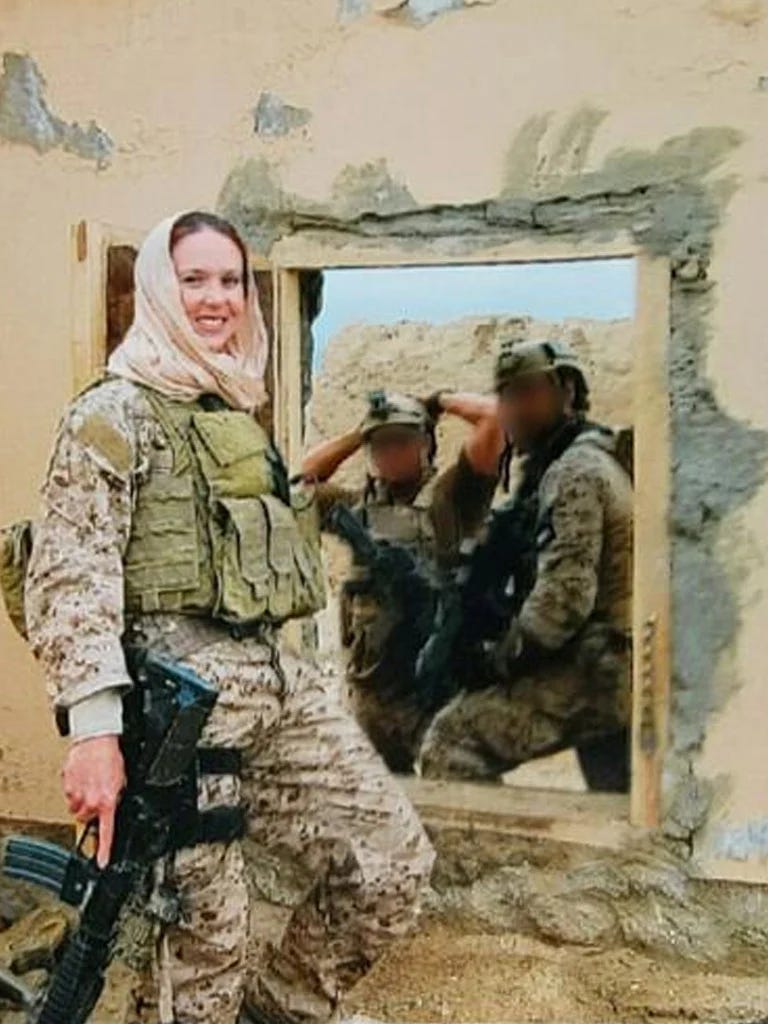
Fully capable of doing what I did, and more, Kent existed as one of the rare examples of someone in the modern day capable of conducting every stage of the hunt. Where I had to stop upon reaching the point of leading troops to target and leave the final decisive moment to them, Senior Chief Kent continued forward. She represented a parallel reality—one closer to the point of action, closer to consequence, closer to the weight of responsibility itself. Yet even there, I suspect, Kent encountered moments where duty required restraint rather than resolution.
Anya Vajra was born from that tension. Not as a fantasy of power, but as a vessel through which to explore the reality of carrying moral responsibility and consequences alone. A character who can act where I could not, because the question of what if refuses to let go. Fiction becomes the only place where that burden can be examined honestly—where purpose, agency, and consequence can all be held in the same hands at once.
Afterward: We’re one week out from the release of Eastern Blood Price. ARC Review copies have been sent out and the ratings and reviews should be coming in soon. If you’re interested in stories about a lone mercenary in high stakes missions, where actions have consequences and everyone carries the weight of their past decisions then maybe the series is for you. Doubly so if you like a little dash of the paranormal in your military fiction.
Alright folks, Sergeant Major’s on the warpath ‘cuz he just caught someone walking on his grass, which means it’s time to put out our smokes and make ourselves scarce.
—Riley